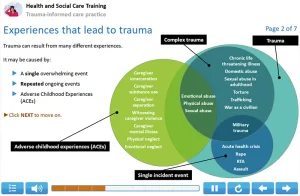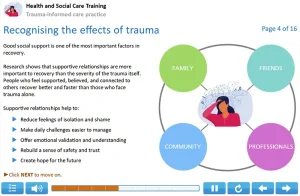



Trauma is far more common than many people realise. Around 6 in 10 adults in England have experienced trauma at some point in their lives, and many never disclose it. This means that you may regularly support people affected by trauma in your work, without even knowing it.
You may have seen this at work: a person may seem fine, then suddenly shuts down, becomes upset, stops engaging or reacts strongly for reasons that you can’t understand. Without knowing their experiences, it can be easy to misread these reactions.
Understanding what trauma is and implementing trauma-informed principles in your practice helps you make sense of these behaviours and adjust your ways of working to create safer environments, build trust and reduce the risk of causing further harm.
This article explains what trauma-informed care is, why it matters and how you can begin applying it in your practice.
Understanding Trauma-Informed Care
Trauma-informed care is an approach that considers trauma in everyday practice. It helps you work in ways that make people feel safer and more in control, reducing the risk of re-traumatisation.
At its core, trauma-informed care means:
- Realising that trauma is widespread
- Recognising the different ways trauma can affect people
- Responding in ways that consider the impact of trauma and adapting ways of working
- Resisting re-traumatisation by being mindful of triggers and creating safe environments
Who is trauma-informed care practice for?
It is important to understand that trauma-informed care is not the same as trauma therapy or treatment. You don’t need to be a therapist or mental health specialist to work in a trauma-informed way.
Instead, anyone can apply trauma-informed principles in their work. It is particularly relevant to anyone whose role involves supporting, teaching, supervising or providing services to others.
This includes professionals working in health and social care, housing and homelessness services, education and training, customer-facing public services and community organisations.
Why Trauma-Informed Care Matters?
Trauma can create significant barriers that make everyday interactions and accessing services feel incredibly difficult or unsafe. When a person has experienced trauma, their brain adapts to protect them from future threats. This means a person may stay on high alert, find it hard to trust professionals, struggle with complex processes or have strong reactions when something reminds them of past experiences.
When services aren’t trauma-informed, routine interactions can unintentionally re-traumatise people, especially when they feel rushed, powerless, judged, trapped or given no choice. People may struggle to explain what they need, feel overwhelmed, miss appointments, and eventually disengage from support altogether.
Trauma-informed care helps reduce these barriers. It supports engagement, improves communication and helps people access the help they need, without adding further harm.
Who benefits from trauma-informed care practice?
Trauma-informed care benefits everyone.
Service users are more likely to feel safe, understood and in control. When people experience more choice, clear communication, and a calmer environment, they are more likely to engage, communicate what they need, and stay involved. This means that they can actually access the support they need.
Professionals gain a clearer understanding of how trauma can affect people and show up in their behaviour. This helps staff respond in ways that feel calmer and less judgmental, which can reduce conflict and prevent situations from escalating. Staff often feel more confident and in control, interactions improve, and work can feel more rewarding when people engage and make progress. Over time, this may also reduce stress and help protect against compassion fatigue and burnout.
Organisations can improve engagement and outcomes, reduce missed appointments and incidents, and deliver more consistent, person-centred care by working in a trauma-informed way. A stronger, more supportive workplace culture can also improve staff retention and overall service quality.
How to apply trauma-informed care in practice
Trauma-informed care is built on five core principles. Understanding and applying these principles transforms how you work with people.
1. Safety
Safety means creating environments where people feel physically and emotionally safe.
For people affected by trauma, their nervous system may be constantly scanning for danger. When their nervous system senses threat, even subtle cues like raised voices, sudden movements, or feeling trapped, their body can react as if the original traumatic event is happening again.
Safety isn’t just about being nice – it is about being mindful that certain things or situations may trigger trauma and deliberately reducing triggers that may activate this threat response.
You create a sense of safety when you:
- Maintain consistent routines and clear expectations
- Create physical spaces that feel welcoming rather than institutional or threatening
- Explain what will happen before it happens
- Respect physical space and ask permission before touching or entering someone’s personal space
Example: A nurse notices a patient looks tense in the waiting area before a routine procedure. They take them into a private room, sit at their level, and speak calmly:
“Let’s do this in here so we’ve got privacy. The door is right there, and you can pause or step out at any time. I’ll explain each step before we do it, and if anything feels uncomfortable, just tell me — we can slow down or take a short break.”
2. Trust
Trust is built when people can rely on you to be clear, honest, and consistent in what you say and do.
Trusting people is often difficult for those who have experienced trauma because past experiences taught them that people can’t be relied upon or may even cause harm. Building trust takes time and requires you to be consistently trustworthy.
You can build trust over time when you:
- Do what you say you’ll do, every time
- Are honest about what you can and can’t offer
- Explain processes, timescales, and next steps
- Maintain appropriate boundaries consistently
- Acknowledge when you have made a mistake
Example: A support worker promises to call the service user after checking an update on their housing application. They make the call at the agreed time, even though there is no new progress yet, and say:
“I said I’d call you today, so I wanted to keep my word. There isn’t an update yet, and I know that’s frustrating. The next step is that the team will review it by Friday. I’ll call you again on Friday afternoon, and if anything changes before then, I’ll let you know.”
3. Choice
Choice means offering options and respecting a person’s right to make decisions about their own lives and care, including the right to say no.
Trauma often involves experiences where a person’s choices and boundaries were taken away. Offering choices restores a sense of having control over their life or their body and sends the message that the person’s preferences and decisions matter.
To support people in making their own choices, you should:
- Involve people in decisions about their own support
- Offer options whenever possible (“Would you prefer to meet in the morning or afternoon?”)
- Ask rather than assume (“Would it be helpful if I…?” rather than “I’m going to…”)
- Provide information so people can make informed choices
- Respect “no” without punishment or guilt
- Accept that people have the right to make choices you might not agree with
Example: A nurse is supporting a patient who looks anxious about an upcoming appointment. Instead of telling them they have to attend, the nurse says:
“There’s an appointment available that could help. Would you like me to explain what it involves? If you decide it’s right for you, we can book it together. If not, that’s okay — we can look at other options or come back to it later.”
4. Collaboration
Collaboration means working with people, and sharing power – not doing things for them without their input.
It recognises that the person you’re supporting is the expert on their own life. Your role is to bring your professional knowledge and work together to find solutions that actually work for them.
You can support collaboration by:
- Asking people what they need rather than assuming you know
- Creating plans together and check what feels realistic
- Sharing information and discussing options together
- Valuing an individual’s input and expertise about their own situation
- Being willing to try a person’s ideas even if they differ from your approach
Example: A support worker is reviewing a service user’s support plan. Instead of presenting a completed plan, she says:
“I’ve been thinking about your goals. Can we sit down together and map out what support might help? I have some ideas, but I really want to hear your thoughts about what would work best for you.”
5. Empowerment
Empowerment means supporting people to make choices, have control, and recognise their own strengths.
Trauma can affect confidence and make people doubt their ability to cope or make decisions. Empowerment helps rebuild that confidence by noticing strengths, offering encouragement, and supporting small, achievable steps.
You can empower people by:
- Noticing and naming strengths (“I’ve noticed how carefully you consider your options”)
- Focusing on what people can do, not just on problems
- Celebrating small wins and progress
- Supporting skill-building and confidence
- Framing people as survivors, not victims
Example: A service user has missed a few appointments and arrives expecting to be told off. Instead of focusing on what went wrong, the support worker says:
“I know it’s been difficult to attend regularly, but I’ve noticed that when we do meet, you come prepared and you’re really thoughtful about what you want to achieve. That takes real strength.”
Looking for Trauma-Informed Care Training for your staff?
To truly embed trauma-informed practice into your work, you need to understand how trauma affects the brain and nervous system, recognise trauma responses as they happen in real time, use specific trauma-informed communication strategies, know how to de-escalate difficult situations safely, and protect yourself from secondary trauma and burnout.
Our Trauma-Informed Care Practice online training course is written in line with the NHS Education for Scotland Knowledge and Skills Framework for Psychological Trauma.The course helps you build practical skills and confidence through real-world examples, case studies and interactive activities to apply trauma-informed principles in your everyday work. It also gives you the tools to create safer environments, build stronger relationships, and make a real difference in the lives of the people you support.
Only £22 + VAT per person.