

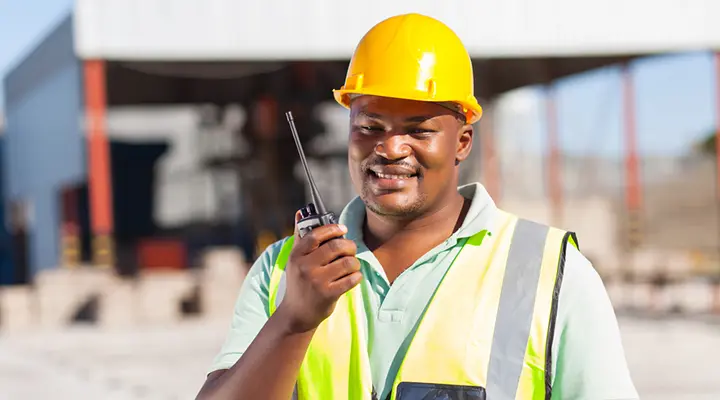

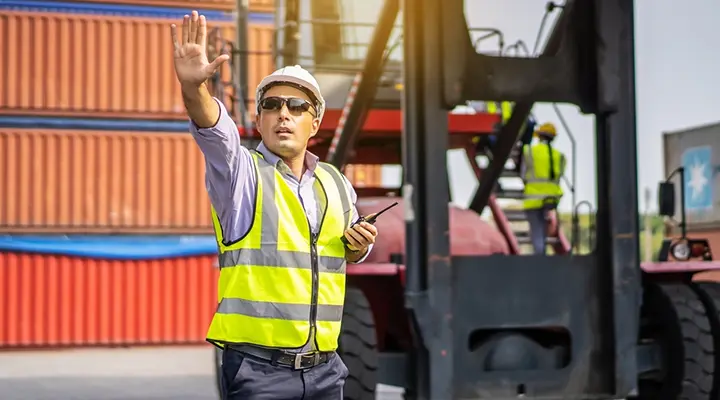
A banksman (or traffic marshal) is a trained worker responsible for safely guiding vehicles and plant machinery during manoeuvres such as reversing, turning, loading and unloading. Banksmen help reduce the risk of collisions, injuries and property damage by maintaining clear communication with drivers and monitoring hazards around moving vehicles.
Although modern vehicles often include cameras and sensors, banksmen still play an essential safety role. Heavy vehicles still have restricted visibility and even blind spots which are too dangerous to leave to chance. A banksman helps reduce the risk of collisions, crushing incidents and injuries to workers or pedestrians on site.
Banksmen are commonly used on:
- Construction sites
- Warehouses and depots
- Farms and industrial sites
- Logistics yards
- Roadworks
- Waste and recycling facilities
A banksman should never simply be “someone helping out.” It is a safety-critical role that requires proper training, communication skills and risk awareness.
Sadly, serious accidents still happen when untrained workers attempt to guide vehicles. Workers have been crushed between reversing vehicles and walls, trapped by plant machinery, or struck because communication broke down during manoeuvres. In many cases, investigations found there was no trained banksman, unclear signalling, or no safe system of work in place.
In other words, these tragic accidents could have been avoided through proper training or better working practices.
Why Are Banksmen Important?
Workplace transport remains one of the most significant causes of serious injuries and fatalities in UK workplaces. According to the Health and Safety Executive (HSE), being struck by a moving vehicle is consistently one of the leading causes of fatal workplace accidents, particularly in industries such as construction, logistics, agriculture, manufacturing, and waste management.
Many workplace transport incidents occur during reversing manoeuvres, loading operations, and vehicle movements where drivers have restricted visibility. Trained banksmen help reduce these risks by guiding drivers safely, monitoring blind spots, controlling pedestrian movements, and ensuring hazards are identified before accidents occur.
Banksman Duties and Responsibilities
A banksman’s main responsibility is to help working vehicles manoeuvre safely in workplaces such as construction sites, depots, loading areas, and other operational environments.
Banksmen are used when vehicles are moving as part of a work activity, particularly in areas where visibility is limited or people and vehicles are working close together. This does not normally include driving on public roads or routine parking in staff car parks.
In doing so, they help protect:
- The driver
- Workers nearby
- Pedestrians
- Property
- Equipment
- The banksman themselves
Banksman Hand Signals
Clear communication is essential when guiding vehicles and plant machinery. Banksmen use recognised hand signals to communicate instructions to drivers during manoeuvres such as reversing, turning, stopping, and positioning vehicles safely.
Using standardised banksman hand signals helps reduce misunderstandings, improve workplace transport safety, and minimise the risk of accidents caused by poor communication. Both the driver and banksman should understand and use the same signals to ensure manoeuvres are carried out safely and efficiently.
Common banksman hand signals include:
- Stop
- Move Forward
- Reverse
- Turn Left
- Turn Right
- Emergency Stop
Workers carrying out banksman or traffic marshal duties should receive training on recognised signalling methods as part of their overall Banksman Training. Proper training helps ensure drivers and banksmen communicate effectively during vehicle manoeuvres and high-risk workplace activities.
For a complete guide to recognised signals and their correct use, read our article: Banksman Hand Signals: The Essential Guide for Safe Vehicle Manoeuvring.
Dynamic Risk Assessment Responsibilities of a Banksman
One of the most important banksman responsibilities is carrying out a dynamic risk assessment before and during every vehicle manoeuvre. A banksman or traffic marshal must continuously monitor the surrounding environment to identify hazards and ensure vehicle movements are completed safely.
Before work begins, employers should carry out a workplace risk assessment to determine:
- Whether a trained banksman is required
- The level of supervision needed
- Appropriate control measures to reduce risks
- Safe systems of work for vehicle manoeuvring activities
However, workplace conditions can change rapidly. Construction sites, warehouses, logistics yards, and industrial environments are often unpredictable, meaning a banksman must continually assess risks in real time.
What Does a Dynamic Risk Assessment Involve?
During vehicle manoeuvring operations, a banksman should:
- Identify potential hazards
- Assess the level of risk
- Implement suitable control measures
- Monitor changing site conditions
- Determine whether it is safe for the manoeuvre to continue
Dynamic risk assessment is a key component of effective banksman duties and is covered in our Online Banksman Training Course, helping workers recognise hazards and make safe decisions in changing workplace environments.
Common Hazards a Banksman Must Monitor
A banksman may need to stop or delay a vehicle manoeuvre if they identify hazards such as:
- Pedestrians entering the work area
- Poor visibility or blind spots
- Mud, uneven surfaces, or unstable ground conditions
- Unsafe driver behaviour
- Vehicle or equipment defects
- Adverse weather conditions
- Excessive noise affecting communication
- Obstructions within the vehicle route
Taking Action When Conditions Become Unsafe
A trained banksman has the authority and responsibility to stop a manoeuvre if conditions become unsafe. Effective Banksman Training teaches workers how to recognise hazards, communicate clearly with drivers, and make informed decisions to protect workers, pedestrians, vehicles, and property.
By carrying out effective dynamic risk assessments, banksmen play a vital role in preventing workplace transport accidents and maintaining compliance with UK health and safety requirements.
Banksman Legal Requirements and Workplace Compliance
While UK health and safety legislation does not specifically require every workplace to employ a certified banksman, employers have a legal duty to manage workplace transport risks and ensure vehicle movements are carried out safely.
The HSE identifies workplace transport as one of the main causes of fatal and major injuries in UK workplaces, highlighting the importance of effective traffic management, competent banksmen, and safe systems of work.
A trained banksman or traffic marshal can play a vital role in helping employers meet their health and safety obligations, particularly in environments where vehicles, plant machinery, pedestrians, and workers operate in close proximity.
Key legislation relevant to banksman duties includes:
- The Health and Safety at Work etc. Act 1974
- The Provision and Use of Work Equipment Regulations (PUWER) 1998
- The Health and Safety (Safety Signs and Signals) Regulations 1996
Under these regulations, employers must take reasonable steps to reduce the risk of workplace transport accidents by providing:
- Safe systems of work
- Suitable risk assessments and control measures
- Adequate banksman and traffic marshal training
- Competent and properly instructed workers
- Appropriate supervision and monitoring
Does Banksman Training Need Practical Training?
A banksman needs to have both theoretical and practical training.
You can complete your theoretical training online, while your practical training should be carried out in a real working environment under supervision.
The theory section often covers:
- Legal responsibilities
- Hazard awareness
- Risk assessments
- Communication methods
- Standard hand signals
The practical section usually involves:
- Guiding real vehicles
- Positioning safely
- Using recognised signals correctly
- Managing realistic manoeuvring situations
Practical assessment is especially important because banksmen work in changing, high-risk environments where communication, positioning and judgement directly affect safety.
Why Is Banksman Training Important?
Because banksmen perform a safety-critical role, employers should ensure workers receive appropriate banksman training before guiding vehicles or plant machinery.
A banksman training course helps workers understand:
- Vehicle blind spots and manoeuvring hazards
- Recognised hand signals and communication methods
- Dynamic risk assessment procedures
- Safe positioning techniques
- Legal responsibilities and workplace safety requirements
Many employers choose online banksman training to provide workers with the theoretical knowledge required for the role. Practical training should then be completed in a real working environment under supervision.
Online Banksman Training course
Our Online Banksman Training Course provides workers with the theoretical knowledge needed to carry out banksman and traffic marshal duties safely and effectively in the workplace. Designed for individuals working around moving vehicles and plant machinery, this course helps learners understand their responsibilities, recognise hazards, and communicate effectively during vehicle manoeuvres.
Protect your workforce. Reduce workplace risks. Stay compliant. Purchase Online Banksman Training today for just £17.50 per person.
{
“@context”: “https://schema.org”,
“@type”: “FAQPage”,
“mainEntity”: [
{
“@type”: “Question”,
“name”: “What is a banksman and what do they do?”,
“acceptedAnswer”: {
“@type”: “Answer”,
“text”: “A banksman (or traffic marshal) is a trained worker responsible for safely guiding vehicles and plant machinery during manoeuvres such as reversing, turning, loading and unloading. They help reduce the risk of collisions, injuries and property damage by maintaining clear communication with drivers and monitoring hazards around moving vehicles.”
}
},
{
“@type”: “Question”,
“name”: “Where are banksmen commonly used?”,
“acceptedAnswer”: {
“@type”: “Answer”,
“text”: “Banksmen are commonly used on construction sites, warehouses and depots, farms and industrial sites, logistics yards, roadworks, and waste and recycling facilities.”
}
},
{
“@type”: “Question”,
“name”: “Why are trained banksmen still necessary if vehicles have cameras and sensors?”,
“acceptedAnswer”: {
“@type”: “Answer”,
“text”: “Heavy vehicles still have restricted visibility and blind spots which are too dangerous to leave to chance. A banksman helps reduce the risk of collisions, crushing incidents and injuries to workers or pedestrians on site that modern technology alone cannot eliminate.”
}
},
{
“@type”: “Question”,
“name”: “What are the main responsibilities of a banksman?”,
“acceptedAnswer”: {
“@type”: “Answer”,
“text”: “A banksman’s main responsibility is to help working vehicles manoeuvre safely by protecting the driver, workers nearby, pedestrians, property, equipment, and themselves. They must use recognised hand signals, carry out dynamic risk assessments, monitor hazards, and have the authority to stop unsafe manoeuvres.”
}
},
{
“@type”: “Question”,
“name”: “What is dynamic risk assessment and why is it important for banksmen?”,
“acceptedAnswer”: {
“@type”: “Answer”,
“text”: “Dynamic risk assessment is the continuous monitoring of the surrounding environment to identify hazards and ensure vehicle movements are completed safely. A banksman must continually assess risks in real time before and during every vehicle manoeuvre, as workplace conditions can change rapidly.”
}
},
{
“@type”: “Question”,
“name”: “What hazards must a banksman monitor during vehicle manoeuvring?”,
“acceptedAnswer”: {
“@type”: “Answer”,
“text”: “A banksman must monitor pedestrians entering the work area, poor visibility or blind spots, mud and uneven surfaces, unsafe driver behaviour, vehicle defects, adverse weather, excessive noise affecting communication, and obstructions within the vehicle route.”
}
}
]
}