


Knowing how to use a fire extinguisher safely can make a significant difference during a workplace emergency. One of the simplest ways to remember the correct technique is the PASS method. In this guide, we’ll explain what PASS stands for, how to use a fire extinguisher correctly, when it is safe to tackle a fire, and why fire extinguisher training is essential.
What is the PASS Method?
The PASS method is a simple four-step process used to operate a fire extinguisher safely. PASS stands for Pull the pin, Aim at the base of the fire, Squeeze the handle, and Sweep from side to side.
What Does PASS Stand For?
PASS is a simple acronym that can help you remember how to use a fire extinguisher in an emergency. It stands for:
- Pull
- Aim
- Squeeze
- Sweep
If the acronym slips your mind, don’t worry. Fire extinguishers have clear visual instructions printed on their labels, showing you how to operate them safely. However, fires can spread quickly and every second counts, so remembering PASS can help you respond more confidently in an emergency.
Let’s take a closer look at the PASS acronym’s meaning.
1. Pull
Pull the safety pin from the extinguisher. This releases the locking mechanism and allows the extinguisher to be operated.
2. Aim
Aim the nozzle or hose at the base of the fire, not at the flames themselves. The fuel source is where the fire needs to be extinguished.
3. Squeeze
Squeeze the handle slowly and firmly to release the extinguishing agent.
4. Sweep
Sweep the nozzle from side to side across the base of the fire until it is completely extinguished.
When to Use a Fire Extinguisher
When you think of a fire extinguisher, you might picture someone rushing into a burning building to put out a fire. In reality, fire extinguishers are meant for tackling small fires in their early stages, and not for heroic firefighting. If you do need to use one, you should always keep a clear escape route behind you so you can leave immediately if the fire grows or conditions become unsafe. That’s why they’re often positioned near exits.
Only attempt to use a fire extinguisher if:
- The fire is small and contained.
- You have a clear escape route.
- The correct extinguisher is available.
- The fire is not spreading quickly.
- You have received appropriate training.
When using an extinguisher, follow key safety rules:
- Use the correct extinguisher, as the wrong type can make the fire worse.
- Remember that most extinguishers only discharge for around 10–30 seconds. To avoid waste, apply the extinguisher in short, controlled bursts and reassess the situation immediately.
- With CO₂ extinguishers, hold the handle and insulated grip only. Never hold the discharge horn, as it becomes extremely cold and can cause cold burns.
- Stop immediately and evacuate if the fire grows, produces heavy smoke, or does not reduce quickly.
- Close doors behind you when evacuating, if it is safe to do so, to help slow the spread of fire and smoke.
Remember: Fire extinguishers are not a reason to remain in danger. Call the emergency services as soon as possible if the fire cannot be safely controlled.
What Happens If You Use the Wrong Fire Extinguisher?
It may seem overly cautious to avoid using a fire extinguisher without training, but using the wrong extinguisher on a fire can make the situation significantly worse. For example, using water on an electrical fire can increase the risk of electric shock, while using the wrong extinguisher on a cooking oil fire can cause the fire to spread rapidly and become far more dangerous.
If you’re dealing with electrical equipment, it’s important to understand which extinguisher is safe to use. Read our guide to the best fire extinguisher for electrical fires to learn more.
Why Fire Extinguisher Training Is Important

Many people assume that using a fire extinguisher is straightforward. While operating one is relatively simple, especially when following the PASS method, it’s still important to receive basic training.
Different types of fires require different extinguishing agents, and using the wrong extinguisher can make a fire worse, increase the risk of injury, and cause additional damage to property.
Understanding the different types of fire extinguishers and their uses is essential for choosing the correct extinguisher and responding safely during an emergency.
For example, using water on a cooking oil fire can trigger a violent reaction that spreads burning oil. Likewise, using water on live electrical equipment can expose the operator to the risk of electric shock. Fire extinguisher training helps ensure that the right extinguisher is used safely and effectively in an emergency.
Fire extinguisher training helps employees:
- Recognise different classes of fire.
- Select the correct extinguisher for the hazard.
- Understand when not to fight a fire.
- Use extinguishers safely and effectively.
- Respond confidently during an emergency.
Training also forms an important part of a wider fire safety strategy, helping businesses meet their legal responsibilities and improve workplace safety.
In many organisations, Fire Marshals play an important role in supporting workplace fire safety. They may be responsible for helping to coordinate evacuations, carrying out routine fire safety checks, identifying potential fire hazards, and ensuring employees understand emergency procedures. Understanding how to use a fire extinguisher safely can complement the wider fire safety responsibilities often associated with the Fire Marshal role.
Common Mistakes When Using a Fire Extinguisher
Even when following the PASS method, people can make mistakes that put themselves and others at risk. Common mistakes include:
- Standing too close to the fire – This can expose you to heat, smoke, and flames, making it harder to escape if the fire suddenly spreads.
- Using the wrong extinguisher – Certain extinguishers can make specific types of fires worse, increasing the risk of injury and property damage.
- Aiming at the flames instead of the base of the fire – The fuel source must be extinguished to stop the fire from continuing to burn.
- Forgetting to maintain an escape route – Always keep a clear path behind you so you can evacuate immediately if conditions become unsafe.
- Continuing to fight a fire that is growing – If the fire is spreading, producing heavy smoke, or cannot be controlled quickly, stop and evacuate immediately.
Fire Extinguisher Safety: Key Takeaways
Fire extinguishers save lives when used correctly, but only if the right extinguisher is available and the user knows how to operate it safely. Remember the PASS method: Pull, Aim, Squeeze, and Sweep. Just as importantly, understand when it is safe to use a fire extinguisher and when evacuation is the best option.
By providing fire extinguisher training and ensuring the correct extinguishers are available for the risks present, businesses can improve safety, reduce damage, and help protect both people and property in the event of a fire.
Fire Extinguisher Online Course
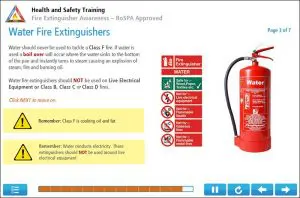
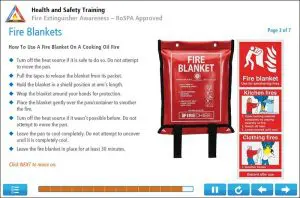
Our Fire Extinguisher Course Online helps employees understand how to use fire extinguishers safely and effectively in the event of a workplace fire. The course covers the PASS method, different fire classifications, how to identify and select the correct extinguisher for different fire risks, and the dangers of using the wrong extinguisher.
RoSPA-Assured and CPD-Certified, the training provides learners with the knowledge and confidence to respond appropriately to small workplace fires while understanding when evacuation is the safest course of action. Delivered entirely online, the course can be completed at the learner’s own pace and helps employers strengthen workplace fire safety awareness and emergency preparedness.
Find out more about our Fire Extinguisher Course Online and help ensure employees have the skills and awareness needed to respond safely and confidently during a fire emergency.