


Minimising risk in the workplace works best with preventative planning, especially when you need employees to know the ins & outs of proper fire safety. If you’re faced with an electrical fire, you need to use the correct fire extinguisher to avoid electrocution. This article will clearly explain which fire extinguishers to use for electrical fires, how to prevent a freeze burn while handling a carbon dioxide extinguisher & information on fire safety courses.
Which fire extinguisher should you use for an electrical fire?
The most common fire extinguisher types for electrical fires are Carbon Dioxide or Dry Powder. These will both starve a fire of oxygen without giving you an electric shock. There are also two newer extinguishers – Water Mist and Lith-Ex – which you can use on electrical fires. Don’t confuse water mist with the traditional water fire extinguisher – which would be very dangerous to use on an electrical fire!
Understanding the differences between water, foam, CO₂, dry powder, and wet chemical extinguishers can help employees make safer decisions during an emergency and reduce the risk of injury or making a fire worse.
To learn more about the different types of fire extinguishers and the fires they are designed to tackle, read our guide to Types of Fire Extinguishers and Their Uses.
You need to handle each type of fire extinguisher slightly differently to avoid injuries like freeze burn or asphyxiation. So, let’s briefly break down the safe use of each extinguisher.
Carbon Dioxide Fire Extinguisher for Electrical Fires

A large black CO₂ label lets you quickly identify carbon dioxide extinguishers.
Carbon dioxide fire extinguishers are very effective for electrical fires, but can come with handling risks. You shouldn’t use them in confined spaces due to the risk of suffocation, and you need to handle them carefully to avoid freeze burns.
To prevent freeze burns, you should never hold a carbon dioxide extinguisher by the horn. If the horn is damaged, it’s best not to use the extinguisher.
Note: You should NOT use a carbon dioxide fire extinguisher for cooking oil or fat fires, solid combustibles, or flammable gases.
Dry Powder Fire Extinguisher for Electrical Fires

Dry Powder Fire Extinguishers are also known as ABC or multi-purpose fire extinguishers. You can recognise them thanks to their blue label which says Powder.
When using this extinguisher, the dry powder will create a barrier between the fire and surrounding oxygen, putting the fire out. You shouldn’t use this extinguisher in enclosed spaces because of the risk of inhaling the chemical powder. The powder can also obscure your vision, so ensure you’re safe from steep drops or trip hazards before using it.
Water Mist Fire Extinguisher for Electrical Fires

You cannot use a standard Water fire extinguisher for electrical fire – because there is a risk you will electrocute yourself. However, Water Mist extinguishers contain de-ionised water – meaning they cannot carry an electrical current. The water droplets creating the mist are so tiny and spaced out that an electrical current couldn’t pass through the mist to reach you. They are a better choice for enclosed spaces than carbon dioxide or dry powder.
However, water mist extinguishers are quite new. So, you’re much more likely to have a carbon dioxide or dry powder extinguisher available in your workplace.
Lith-Ex Fire Extinguisher for Electrical Fires

Lith-Ex Fire Extinguishers have a green label. These can be a great option for small fires caused by lithium batteries, which can be found in devices like mobile phones, power tools, laptops, vapes, and electric vehicles like bicycles, scooters, and electric cars.
Lithium batteries can overheat and even explode if they are faulty or overcharged. This is normally only a problem when the safety features fail – but it can happen fast and create dangerous toxic fumes. Be aware that lithium battery fires can be difficult to put out. Take a look at a video from Hertfordshire Fire Rescue Service on Lithium Battery Safety in the Workplace.
How do you put out an electrical fire?
There are a few steps to follow when faced with an electrical fire, in line with i2comply fire safety courses:
For what you can assess is a large electrical fire:
- Evacuate the building immediately
- Call 999
For what you can assess is a small electrical fire:
- Only attempt to put out a fire when it is safe to do so – such as a small fire that hasn’t had the chance to spread.
- Position yourself between the fire and a safe exit so you can evacuate safely if you can’t extinguish the fire or the fire spreads.
- Only if it is possible, cut off the power source so an electrical current is no longer flowing.
- Select a suitable extinguisher and check that the pressure gauge needle is set in the green zone. Remember – for an electrical fire – that means a Dry Powder, Carbon Dioxide, Water Mist, or Lith-Ex extinguisher.
- Direct the nozzle straight at the fire and pull out the safety pin or ring. Then squeeze the lever to discharge the contents of the extinguisher.
- As the fire starts to die down, you can move closer.
- Use the entire contents of the fire extinguisher.
Don’t be surprised if the fire extinguisher empties quickly – a 5kg carbon dioxide extinguisher will only have around 10 seconds of carbon dioxide to discharge.
Common sources of electrical fires
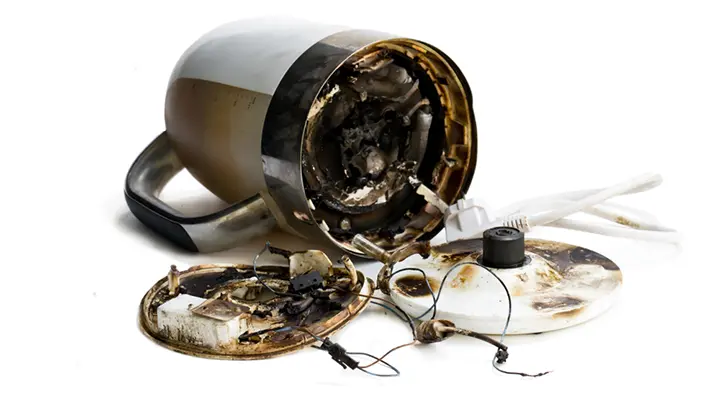
Electrical fires are often caused by overloaded sockets, damaged wiring, faulty electrical equipment, or the incorrect use of appliances. Employers can reduce the risk of workplace electrical fires by ensuring installations are maintained by a qualified electrician. They should also avoid overloading plug sockets and switch off equipment when it is not in use. Regular Portable Appliance Testing (PAT Testing) can also help identify faulty electrical equipment before it becomes a fire hazard.
Providing employees with Fire Safety Awareness Training can also help staff identify common electrical fire hazards, understand fire prevention measures, and respond safely in an emergency. Learn more about our Online Fire Safety Course and how it can help create a safer workplace.
Virtually all circuits in new or rewired UK buildings now include circuit breakers (RCDs) to help prevent electrical fires. But if you live or work in an older building, it’s worth asking a professional to check that a RCD is installed and that wiring is in good condition.
You can also ask an electrician to install electrical Arc Fault Detection Devices (AFDD) to detect electric socket faults early. In some buildings – like care homes – these are now mandatory.
To avoid lithium battery fires, you shouldn’t charge the batteries unattended or leave them plugged in overnight.
We hope you found this article about the best fire extinguisher for electrical fires helpful!
Fire Extinguisher Online Course
Our Fire Extinguisher Course Online provides employees with the knowledge and confidence to use fire extinguishers safely and effectively in the event of a workplace fire. The course covers the different types of fire extinguishers, fire classifications, workplace fire safety responsibilities, and the correct use of extinguishers using recognised fire safety procedures.
RoSPA-Assured and CPD-Certified, the training is suitable for organisations across a wide range of industries and workplace environments. Delivered entirely online, learners can complete the course at their own pace while helping employers meet workplace fire safety training requirements and improve emergency preparedness.
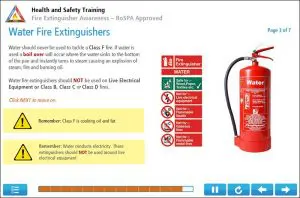
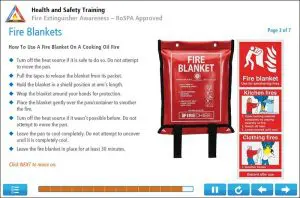
Find out more about our Fire Extinguisher Course Online and help ensure employees have the skills and awareness needed to respond safely and confidently during a fire emergency.