
Discounts Available For Bulk Purchases
| No. of total licenses | % saving |
|---|---|
| 1 - 9 | - |
| 10 - 19 | 10% |
| 20 - 49 | 20% |
| 50 - 99 | 25% |
| 100 - 199 | 30% |
| 200 - 499 | 40% |
| 500 - 999 | 50% |
| 1000 + | 60% |
Click on the image below to download the Advanced Safeguarding Children Online Course for PGA members Flyer.
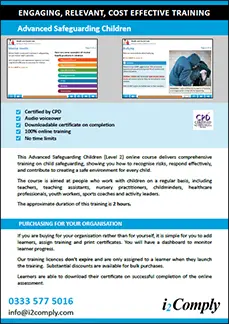
Advanced Safeguarding Children Online Course for PGA members
£20.90 + £4.18 VAT
- CPD certified
- Audio voiceover
- Approximate course duration 2 hours
- Downloadable certificate on completion
- 100% online training
Our online Advanced Safeguarding Children course is designed specifically for PGA Professionals, golf coaches, assistant professionals, and anyone working with children and young people within golf. The course explains what safeguarding children means and how to protect a child’s right to live in safety, free from abuse and neglect.
The training strengthens your understanding of safeguarding responsibilities and helps you identify potential risks that children and young people may face in golf environments, including coaching sessions, junior competitions, academy programmes, golf camps, and online interactions.
You will learn how to recognise the signs and indicators of different forms of abuse and neglect, including physical abuse, emotional abuse, sexual abuse, bullying, grooming, and exploitation. The course also provides guidance on responding appropriately and sensitively when a child discloses information or when you have concerns about their welfare.
In addition, the course explains how to record and report safeguarding concerns accurately and in line with PGA’s safeguarding policies, governing body requirements, and statutory guidance. You will gain a clear understanding of your role and responsibilities in creating and maintaining a safe, positive, and inclusive sporting environment.
By the end of the course, you will have the confidence and knowledge to take appropriate action to protect children, promote their wellbeing, and contribute to a culture where safeguarding is everyone’s responsibility.
Our course takes approximately 2 hours to complete.
Who is advanced safeguarding children training for?
This Advanced Safeguarding Children course is designed for PGA Professionals and anyone who works directly with children and young people within golf. It is suitable for those who have regular contact with junior golfers as part of their coaching, teaching, supervisory, or support role.
Reviewed and approved by lead bodies
The training course complies with the Continuing Professional Development (CPD) guidelines and is accredited by the CPD Certification Service.
Course learning outcomes
After completing the Advanced Safeguarding Children course, you will be able to:
- Identify who is responsible for safeguarding children.
- Describe legislation that relates to safeguarding children and what happens when suspected abuse is reported.
- Identify parental/carer issues that can contribute to child abuse.
- Describe several kinds of abuse that children can experience.
- Identify special issues regarding disabled and deaf children.
- Outline what to do if a child discloses abuse or you suspect abuse.
Example course pages
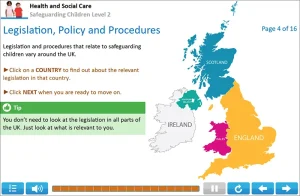
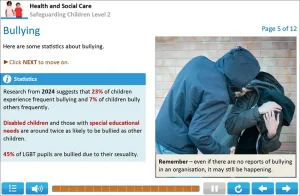
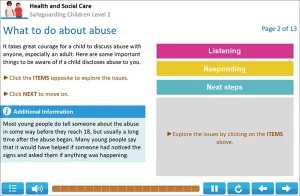
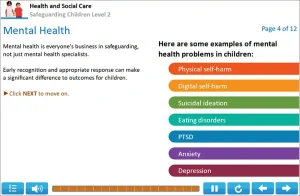
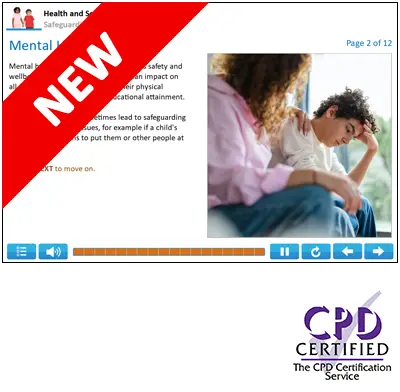
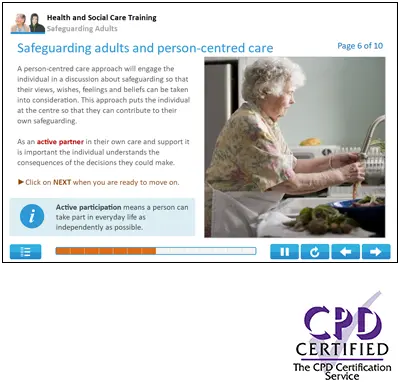
You will find example screens from our Advanced Safeguarding Children online training course below. All of our courses are designed to be simple but informative, to make it easy for you to learn. We incorporate text, images, tables and professional audio throughout to support different ways of learning.
(Click on the example screens below to view)
Course content
The online Advanced Safeguarding Children course covers the following 16 topics:
1 – Introduction to safeguarding children
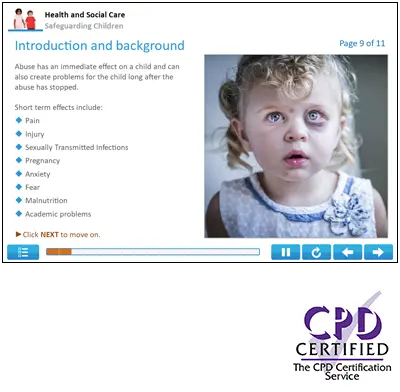
The first topic explains what safeguarding children means. It outlines who abuses children and identifies who is responsible for safeguarding children. The topic also describes the short-term and long-term impact of child abuse.
2 – Legislation, policies and procedures
The second topic introduces fundamental human rights and the rights of a child. It outlines key UK legislation and policies related to safeguarding and explains what happens in different parts of the UK after child abuse has been reported.
3 – About parents and carers
The third topic describes how issues such as drug and alcohol misuse, mental health difficulties, and stress can affect parents’ and carers’ ability to care for children appropriately. It also highlights the importance of early help.
4 – Physical abuse
Topic 4 focuses on the physical abuse of children. It explores definitions and prevalence statistics and identifies the short-term and long-term effects of physical abuse. It also outlines how to recognise possible signs that a child may be at risk of physical abuse.
5 – Emotional abuse
Topic 5 explores emotional abuse and the impact it can have on child victims. This topic covers the definition and prevalence of emotional abuse, its effects on children, and how to recognise the signs that it might be taking place.
6 – Sexual abuse
Topic 6 is about the sexual abuse of children. This topic covers definitions of sexual abuse, its prevalence, the short-term impact and long-term effects on children, and the signs to look out for that can help identify whether a child is being abused.
7 – Neglect
Topic 7 explains what neglect is and outlines the impact it has on a child. This topic covers the definition and prevalence of neglect, four different types of neglect, its impact on children, and the signs that a child is being neglected.
8 – Domestic abuse
Topic 8 explores how domestic abuse between parents can impact children in the household. This topic covers the definition and prevalence of domestic abuse, explains what constitutes domestic abuse and identifies how it affects children. Finally, it outlines the warning signs that a child may have witnessed domestic abuse.
9 – Human trafficking
Topic 9 is about the human trafficking of children. It provides a definition of human trafficking and some reasons why children are trafficked. The topic also explores the relationship between trafficking and abuse, outlines the prevalence of human trafficking in the UK, and identifies signs that a child has been trafficked.
10 – Radicalisation
Topic 10 is about radicalisation and how to prevent children from being radicalised. This topic provides a definition of radicalisation, explores what makes children vulnerable to radicalisation, and identifies signs that a child is being radicalised.
11 – Bullying
Topic 11 defines what constitutes bullying, outlines its prevalence and explains the impact on those who bully, are bullied and who witness bullying. This topic also identifies signs that help recognise when a child is being bullied.
12 – Online issues
Topic 12 is about online issues and how they affect a child’s health and well-being. This topic covers cyberbullying, sexting, online pornography, online grooming, and some new online developments that can be unsafe.
13 – FGM
Topic 13 is about female genital mutilation, also known as FGM, and other harmful practices. This topic explains what FGM means, where it happens, and its prevalence. It also explores the impact of FGM and the signs that a girl may have been subjected to FGM. This topic also explores other harmful practices, including forced marriage, breast flattening, virginity testing, and hymenoplasty.
14 – Special issues around disabled children
Topic 14 is about special issues around disabled children. This topic explores why disabled children are more likely than other children to be abused, the communication barriers that mean disabled children may not get the help they need, and how isolation increases risks for disabled children. It also explains how the signs that a disabled child is being abused can be missed.
15 – Mental Health
Topic 15 is about mental health and safeguarding. This topic explores which children can have mental health problems, the importance of early recognition, how common mental health problems are in children, and how to respond to disclosure.
16 – What to do about abuse
The final topic is about what to do when you suspect a child is, or has been, subject to abuse. This topic covers how to deal with disclosure, how and why you should record abuse, and how to report abuse.
Course assessment
At the end of the course, there is an assessment, which consists of 26 multiple-choice questions. The questions are generated from question banks, which means the questions are different each time you participate. This makes the training suitable for both initial and refresher training.
Each question includes helpful feedback, allowing you to understand any mistakes and reinforce your learning.
You need to score 80% to pass the assessment. There are no limits on the number of attempts for the course assessment, which allows you to take it multiple times until you feel confident that you have learned the course material.
Course certificate
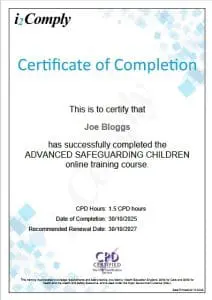 When you have successfully passed the online Advanced Safeguarding Children course assessment, you will be able to download and print your certificate immediately. Your certificate will include the CPD logo and, therefore, you can use it to provide evidence for compliance.
How long is my safeguarding children course certificate valid for?
Your Advanced Safeguarding Children course certificate does not have an expiry date. However, to keep your safeguarding knowledge up to date, we recommend renewing the course every three years. This recommended renewal date will be printed on your certificate.
Course reviews
We value feedback from our learners and welcome you to share your experience with us.
Once you have completed the Advanced Safeguarding Children training course, we’d love to hear your feedback. Please visit our Advanced Safeguarding Children Course Reviews page to get an insight into the quality and effectiveness of our courses.
You can read what others have said about our training on leave a review on Reviews.io or leave a review on Google, we would really appreciate it.
What does safeguarding children mean?
Safeguarding children refers to the actions, policies, and procedures put in place to protect children and young people from abuse, neglect, exploitation, and harm. The primary aim of safeguarding is to promote the welfare of children, ensure their safety, and provide environments where they can thrive, develop, and reach their full potential.
Effective child safeguarding involves recognising and responding to concerns about a child’s wellbeing, protecting children from physical, emotional, and sexual abuse, and preventing harm to their health and development. It also includes ensuring that children receive safe, effective care and support, regardless of their background or circumstances.
Everyone who works with children has a responsibility to help keep them safe. This includes identifying potential safeguarding risks, reporting concerns appropriately, and following child protection procedures to ensure that children receive the help and support they need.
By promoting a culture of safeguarding, organisations can help ensure that all children have the opportunity to grow up in a safe, supportive environment with equal opportunities to succeed and achieve positive outcomes.
What is cyberbullying?
Cyberbullying is a form of online bullying that takes place through digital devices and internet-connected platforms. Children and young people may experience cyberbullying through social media, messaging apps, online gaming, emails, and other digital communication channels. In sporting environments, including golf clubs and junior coaching programmes, cyberbullying can negatively affect a young person’s wellbeing, confidence, and enjoyment of sport.
Cyberbullies may send threatening messages, spread rumours, share embarrassing images, create fake profiles, or post harmful comments intended to intimidate or humiliate others. In sport, cyberbullying may be linked to performance, competition results, team selection, or relationships between players.
Unlike traditional bullying, cyberbullying can happen at any time and reach victims wherever they are. The impact can include anxiety, low self-esteem, poor mental health, and reduced participation in sport.
Recognising the signs of cyberbullying and promoting online safety are important parts of safeguarding children. Coaches, parents, volunteers, welfare officers, and club officials all have a responsibility to help protect young people from online abuse and create safe, inclusive sporting environments.
Sadly, cyberbullying remains a common safeguarding concern. Around one in five children aged 10 to 15 in England and Wales experienced online bullying in the year ending March 2023.
For more information, read our article How to Keep Children Safe Online.
Other Online Safeguarding & Welfare Courses
Click on the course titles below to learn more about our safeguarding, welfare, and professional development courses, or browse our complete course catalogue.
Any additional questions on the course?
Even after reading all the relevant information and answers to questions regarding our safeguarding children training above, you might have some other queries. If so, contact one of our experts by emailing support@i2comply.com or call 0333 5775 017.
We also have a resource centre available to answer FAQs. Please see what questions we’ve previously answered, including replies to questions regarding licences, account settings, discounts, payment options and more.
Request an online training quote
Whether you are looking to train a small team or an entire business, we’re here to help. Let us know your online training requirements and we’ll provide you with a quote.
£20.90 + £4.18 VAT
Discounts Available For Bulk Purchases
| No. of total licenses | % saving |
|---|---|
| 1 - 9 | - |
| 10 - 19 | 10% |
| 20 - 49 | 20% |
| 50 - 99 | 25% |
| 100 - 199 | 30% |
| 200 - 499 | 40% |
| 500 - 999 | 50% |
| 1000 + | 60% |
Related courses
Safeguarding Children Level 1 Online Course
Price£17.50 + £3.50 VAT
Safeguarding Children Level 2 Online Course
Price£22.00 + £4.40 VAT
Safeguarding Adults Online Training Course (Level 2)
Price£17.50 + £3.50 VAT
