




In September 2026, schools in England must follow new Food Allergy Safety Guidance. People commonly refer to these requirements as “Benedict’s Law”. The guidance honours Benedict Blythe, a five-year-old boy who died after a severe allergic reaction at school in 2021.
Food allergies are becoming increasingly common among children. As a result, schools must take effective steps to protect pupils and manage allergy risks.
Food allergies affect an estimated two children in every classroom. In addition, hospital admissions for allergic reactions have risen significantly in recent decades. Therefore, the new requirements aim to improve allergy management and create safer learning environments for pupils across England.
What is Benedict’s Law?
Benedict’s Law introduces new requirements designed to improve allergy safety in schools across England. Schools must follow the Food Allergy Safety Guidance from September 2026.
The guidance honours Benedict Blythe, a five-year-old boy who died after an allergic reaction at school in 2021. Following his death, Benedict’s family campaigned for stronger and more consistent allergy safety measures. As a result, policymakers introduced new requirements to improve allergy management in schools.
Benedict’s Law helps schools recognise and respond to allergic reactions quickly and effectively. In addition, it introduces consistent standards across England. These measures improve pupil safety, support children with allergies, and give parents greater confidence that schools can protect their children.
Why Are the New Allergy Rules Being Introduced?
The Growing Impact of Food Allergies
Taking allergies seriously in schools has never been more important. Around one in five children in the UK has an allergic condition. In addition, severe allergic reactions can become life-threatening without prompt treatment. The Benedict Blythe Foundation estimates that allergy-related illness and medical appointments cause the loss of hundreds of thousands of school days each year.
For children and their families, food allergies can create daily challenges. Many parents worry about their child’s safety at school and whether staff can respond effectively in an emergency. Meanwhile, children may feel anxious about eating, socialising, or joining activities. When schools understand allergies and follow clear procedures, they help pupils and parents feel more confident and supported.
Creating Safer School Environments
Fortunately, the new requirements will create a more consistent approach to allergy management. As a result, schools can better protect pupils with allergies. When staff recognise symptoms, administer emergency medication, and follow clear procedures, they can reduce risks and support full participation in school life.
Allergy Management and Food Safety
Effective allergy management also supports wider food safety practices. Schools that understand allergen risks, cross-contamination, and safe food handling can better protect pupils and meet their safeguarding responsibilities. To learn more, read our guide to the wider benefits of good food safety.
What Do the New Rules Mean for Schools?
From September 2026, schools must take several steps to improve allergy management and pupil safety.
Schools will need to:
- Keep spare adrenaline auto-injectors available for emergencies.
- Provide appropriate allergy awareness training for staff.
- Maintain a comprehensive allergy policy.
- Develop Individual Healthcare Plans for pupils with allergies and other medical conditions.
- Improve incident recording, reporting, and review processes.
For school leaders, these changes provide an opportunity to strengthen safeguarding, improve allergy management procedures and create a safer environment for pupils with food allergies.
Schools can strengthen their allergy management procedures through Food Hygiene Training, First Aid Training, and Safeguarding Courses. These courses help staff understand allergen risks, respond confidently during medical emergencies, and support pupil wellbeing.
Why Food Allergy Awareness Training Is Important
Food allergy awareness training helps school staff recognise allergic reactions, reduce allergen risks, and respond effectively in an emergency. As schools prepare for the new Food Allergy Safety Guidance for Schools, staff must understand their responsibilities and follow clear allergy management procedures.
Training helps staff build confidence, reduce the risk of accidental allergen exposure, and support compliance with school allergy policies. As a result, schools can create a safer and more inclusive environment for pupils with allergies.
Allergy Awareness Training for Schools
Our Allergy Awareness for Schools course has been designed to provide staff with practical, school-focused training on allergy awareness and management.
The course covers:
- Common allergies and allergen risks within a school environment
- Signs and symptoms of allergic reactions, including anaphylaxis
- How to respond effectively in an allergy emergency
- The use of adrenaline auto-injector devices
- Schools’ responsibilities for managing allergies safely
- Key elements of an effective allergy safety policy
- Practical measures staff can take to reduce allergy risks
- Supporting the safety, inclusion and wellbeing of pupils with allergies
The course takes approximately one hour to complete. It is suitable for teachers, teaching assistants, catering staff, lunchtime supervisors, and other school employees who support pupils with food allergies. Learners can study at their own pace and fit training around busy school schedules.

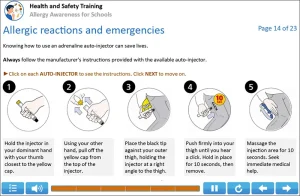
Help your school prepare for Benedict’s Law with our Allergy Awareness Training for Schools. Equip staff with the knowledge to recognise allergic reactions, manage allergen risks, and support pupil safety.