

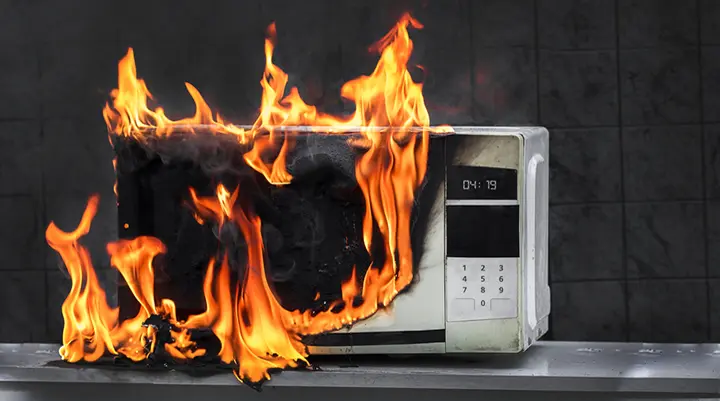

Did you know in 2024/25 13,134 workplace fires occurred in England? Most of these fires were due to faulty electrical appliances and leads.
If you are an employer or you own premises, you have a legal duty to make sure that your workplace or premises and the people who work there are kept safe from fire. That doesn’t mean having to take complicated training. As a leading supplier of online fire safety courses, we know how to help businesses adjust to improved fire safety.
Regular Fire Safety Awareness Training helps employees identify fire hazards, understand emergency procedures and reduce the risk of workplace fires.
The following guide identifies some of the things you will need to consider when thinking about fire safety in the workplace.
This article will help you identifies some of the things you will need to consider when thinking about fire safety in the workplace, especially if this if your first time needing to do so.
Identify Hazards & Risks
First, you’ll need to complete a fire risk assessment of your work premises, which must be frequently reviewed. The risk assessment will identify the potential fire hazards and the people who are at risk. You will then be able to evaluate your findings and work towards removing or reducing these risks. The ultimate goal is to prevent fire and keep people safe.
For more information on fire risk assessments, please read our article Who is responsible for completing a fire risk assessment?
Create an Evacuation Plan
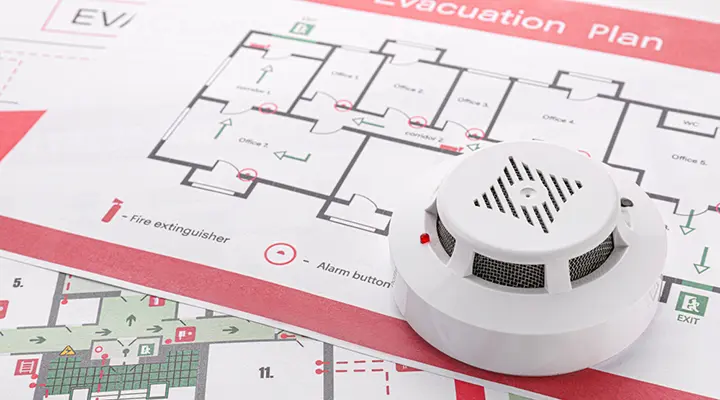
After identifying potential fire hazards, you will need to create a fire emergency evacuation plan (FEEP). An evacuation plan aims to get everyone out of the building and away from possible danger, quickly and safely.
A fire evacuation plan is a written document. It should include the actions to be taken by staff, visitors or customers in an emergency. The plan’s contents will depend on the fire risks and size of your premises.
Typically you should consider:
- Evacuation strategy
- Action on discovering a fire
- Action on hearing the fire alarm
- Who calls the emergency services
- Identification of key escape routes
- Fire wardens/marshals
- Places of assembly and roll call
- Fire fighting equipment
- Staff Training
- Nominated person to meet the emergency services
Once a plan is in place, clear and concise instructions of the routine to be followed should be prominently displayed around the building and your employees should be informed.
Fire escape plans could include schematic drawings and should clearly show marked routes to all exit doors. These routes should be as short and direct as possible. The plan might also show the location of fire extinguishers and fire alarm call points.
Finally, the plan will need to include assembly points outside the building. These are places where people should meet outside of the building after evacuating. This will allow fire marshals to do a head count and make sure that everyone makes it out of the building safely. If you don’t a designated fire marshal yet, get someone in the business to take our speedy 2-hour fire marshal training course.
You may need to make special arrangements for people with mobility needs, for example to help wheelchair users navigate the stairs.
Practice Drills

It’s not enough to simply create an evacuation plan. You need to rehearse it as well. Conduct fire training drills for employees and do them on a regular basis.
You should conduct at least one fire drill annually and record the results. You must keep the results as part of your fire safety and evacuation plan.
It’s also helpful to go over your evacuation plan regularly to ensure it stays up to date. Update your evacuation plan if you make any relevant changes to the building, like new exits or fire extinguishers.
Fire safety signs
You must ensure fire safety signs are displayed around the building and in the correct places. Make sure fire exit signs are in locations that make them easy to see during a fire. Ensure there are signs next to all fire call points and that the correct signs are next to fire extinguishers.
Signs need to be big enough so that people can see them from far away. Always illuminate your signs so that they’re visible even if the power goes out. Also, make sure to include emergency lighting to help people find their way out of the building.
Fire detection and warning systems
Fire detectors, smoke alarms and fire alarm systems provide employees and customers time to leave the premises calmly and safely. However, automatic fire detectors do not remove the need to provide people with a manual way to raise the alarm.
You need to test your fire detectors, call points and alarm system often to make sure that it all functions properly. Any servicing and necessary repairs must be recorded to demonstrate compliance with the law.
Fire fighting equipment

The type and amount of equipment you need will depend on your business premises.
Fire extinguishers should be placed by emergency exits or fire alarm call points. Fire extinguishers or equipment designed for special purposes must always be within reach of the specific hazard. For example, place a wet chemical extinguisher or a fire blanket close to a kitchen with cooking facilities. We highly recommend reading our advice on the different types of fire extinguishers you need in the workplace.
Staff can use fire extinguishers to extinguish small fires before they become more dangerous. However, your employees and others in the building should only use extinguishers if they are trained and when it’s safe to do so. If this is something you lack or need help with, get a member of staff to take our fire extinguisher awareness course.
Maintenance and testing
Any fire fighting equipment must be properly installed, tested, and maintained.
You must carry out regular checks to make sure that:
- fire alarm systems are working
- all fire detectors are working
- the emergency lighting is working
- all fire call points are working
- automatic fire doors close correctly
- fire extinguishers are in working order
- you record any faults in systems and equipment
Employee Training
Employee training plays a huge role in any fire safety plan and helps stop fires from ever starting. Train your employees on fire safety practices and evacuation plans so that everyone in the building understands exactly what to do during a fire.
Routine Fire Safety Awareness Training helps keep employees updated about fire safety methods and alerts them to any changes. When employees stay informed about fire safety, they remain calmer during a potential emergency.
Employees with additional fire safety responsibilities may require Fire Marshal Training.
Complying with the law
Your local fire and rescue authority is usually enforce fire safety legalisation. They can visit your premises to check that the fire risk assessment and fire prevention measures are appropriate.
The authority can act if they think your fire safety measures are inadequate. They can issue:
- An informal notice – suggesting safety measures.
- A formal fire safety notice – specifying the problem(s) and the required remedy.
If you ignore fire safety regulations, you could be fined or go to prison. Minor penalties can be up to £5,000. Major penalties can be unlimited fines and up to 2 years in prison.
Fire Safety Training for Employees
Understanding fire safety in the workplace is essential for protecting employees, visitors, and business premises from the risks of fire. Employers have a legal responsibility to provide appropriate fire safety information and training, ensuring staff know how to prevent fires and respond effectively in an emergency.
Our Fire Safety Awareness Training for employees provides practical guidance on identifying fire hazards, reducing fire risks, following evacuation procedures, and understanding individual responsibilities under UK fire safety legislation. The course is suitable for employees across a wide range of workplace environments and helps support a safer workplace culture.
Delivered entirely online, the training allows employees to learn at their own pace while providing employers with a flexible and cost-effective way to meet workplace fire safety training requirements. Upon successful completion, learners receive an instant certificate to demonstrate their understanding of essential fire safety principles.
Learn more about our Online Fire Safety Training for Employees and help ensure your workforce has the knowledge and confidence to prevent fires and respond safely in an emergency.