Discounts Available For Bulk Purchases
| No. of total licenses | % saving |
|---|---|
| 1 - 9 | - |
| 10 - 19 | 10% |
| 20 - 49 | 20% |
| 50 - 99 | 25% |
| 100 - 199 | 30% |
| 200 - 499 | 40% |
| 500 - 999 | 50% |
| 1000 + | 60% |
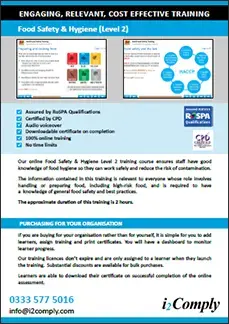
Click on the image below to download the Level 2 Food Hygiene Course Online Flyer.
Level 2 Food Hygiene Course Online
£17.50 + £3.50 VAT
- Assured by RoSPA Qualifications
- Certified by CPD
- Audio voiceover
- Approximate course duration of 2 hours
- Downloadable certificate on completion
- 100% online training
- No time limits
Our Level 2 Food Hygiene Courseis designed for food handlers whose role involves preparing, cooking, handling, serving or storing food. The course provides essential knowledge of food hygiene and safety, helping learners understand how to prevent contamination, control food safety hazards and reduce the risk of foodborne illness.
Level 2 Food Hygiene training is commonly suitable for people working with food in restaurants, cafés, takeaways, pubs, hotels, catering businesses, schools, care settings and other environments where food is prepared or handled. The training helps food businesses ensure that staff have food hygiene knowledge appropriate to their role and responsibilities.
Complete the Level 2 Food Hygiene training online in approximately 2 hours and download your certificate immediately after successfully passing the assessment. The course can be completed at your own pace, allowing you to work through the training at a convenient time and revisit the course material when needed.
The importance of Food Hygiene training
UK food hygiene legislation requires food businesses to ensure that food handlers are appropriately supervised, instructed and/or trained in food hygiene matters relevant to their work activities. Food businesses must therefore ensure that staff receive food hygiene training appropriate to their role and responsibilities.
Effective food hygiene training helps food handlers understand how to work safely, prevent contamination and reduce the risk of foodborne illness. The course covers important food safety principles, including the 4 Cs of food hygiene – Cleaning, Cooking, Chilling and Cross-contamination.
For more information, read our guide on Why is Food Hygiene Training Important?.
If you are responsible for supervising or managing food handlers and for maintaining and overseeing food safety standards within the workplace, you should complete a Level 3 Food Hygiene and Safety training course.
Please note: This course is not a regulated RQF food safety and hygiene qualification. The course level indicates the level of training and is provided to help organisations identify which course is appropriate for their staff.
Who should take a Level 2 Food Hygiene Course?
This Level 2 Food Hygiene course is suitable for anyone whose role involves handling, preparing, cooking, serving, storing or selling food. Food hygiene training helps food handlers understand their responsibilities, follow safe food handling practices, and comply with UK food safety legislation.
This includes employees working in restaurants, cafés, takeaways, pubs, hotels, catering businesses, hospitals, care homes, schools, colleges, nurseries, food manufacturing, and other environments where food is prepared or served.
Is the Level 2 Food Hygiene Course accredited?
The Royal Society for the Prevention of Accidents (RoSPA) have assured the training course through their Course Assurance scheme. This means the course meets their high standard and you can be confident that the course contents are relevant and of a high standard.
The training course also complies with the Continuing Professional Development (CPD) guidelines and is accredited by the CPD Certification Service.

What will I learn on the Level 2 Food Hygiene Course?
After completing the course you will be able to:
- List potential consequences of poor food safety for a variety of different people.
- Outline what the law, including Natasha’s Law, says about food safety.
- Describe the sources and symptoms of food poisoning.
- Purchase food supplies safely and check deliveries of food.
- Store food safely.
- Prepare and cook meat, fish, eggs, rice and other foods safely.
- Describe the effect of temperature on bacteria.
- Describe common food pests and how to control them.
- Outline rules of personal hygiene for food handlers.
- Explain cleaning methods appropriate in food production.
Example course pages
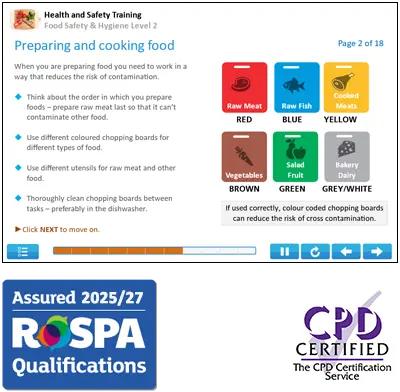
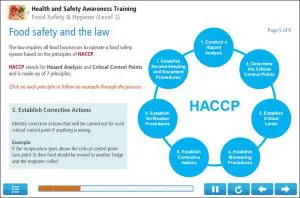
Take a look below at some samples of our online course slides. We’ve learnt from our customers that keeping our course materials simple and easy to follow, helps with retaining information.
(Click on the example screens below to view)


What does the Level 2 Food Hygiene Course cover?
This Level 2 Food Hygiene online course contains the following 9 topics:
1 – Why food safety is important
The first topic is about the importance of food safety. The topic identifies who needs to know about food safety and the consequences of inadequate food safety. You will also learn about four types of food contamination and which groups of people are most vulnerable to food poisoning.
2 – The law and food safety
The second topic describes UK food safety law. It outlines the basic principles of HACCP and identifies specific legal requirements for food preparation.
3 – Food poisoning
The third topic identifies food poisoning bacteria and their consequences. You will learn about how bacteria reproduce and the effect of temperature on bacteria. The topic also covers other sources of food poisoning.
4 – Purchasing and deliveries
Topic 4 is about food purchasing and deliveries. You will learn about dates on food and how to use carrier bags safely. The topic describes how to check deliveries properly and when deliveries should be rejected.
5 – Food storage
Topic 5 is about food storage. The topic describes how to store, refrigerate, freeze and defrost food safely. You will learn about the best areas of the fridge for different types of food.
6 – Preparing and cooking food
Topic 6 shows you how to prepare food in a way that reduces the risk of contamination. You will learn about which meat and fish are safe to eat rare. The topic provides tips on barbecues and how to cook eggs, rice and pulses safely.
7 – Food pests
Topic 7 is about food pests. It identifies animals that can contaminate food. You will also learn how to spot the signs of food pests and how to deal with them.
8 – Personal Hygiene
Topic 8 is about personal hygiene. It covers the importance of hand washing and rules of personal hygiene for food handlers.
9 – Cleaning methods
The final topic outlines the standard cleaning process for food preparation areas. You will learn how and when to clean surfaces and equipment.
How is the Level 2 Food Hygiene Course assessed?
Once you have completed the nine topics, you will be allowed to take the assessment. The Food Hygiene course generates an assessment of 20 Questions from question banks so that the questions change each time a candidate takes the assessment. This makes the training suitable for initial and refresher training.
There is no limit on the number of attempts at the assessment. In addition, the training course gives useful feedback so learners can learn from incorrect responses.
Your Level 2 Food Hygiene certificate
 Once you have successfully passed the online course assessment, you can download and print your Level 2 Food Hygiene certificate immediately.
How long is this Level 2 Food Hygiene certificate valid for?
To ensure knowledge of Food Safety best practices is maintained, we recommend resitting the Level 2 Food Hygiene training after 2 years.
Our Level 2 Food Hygiene certificate doesn’t have an expiry date but we include a recommended renewal date instead.
Not sure which level of food hygiene training is right for you? Read our guide on what food hygiene certificate you need.
Course reviews
Our Level 2 Food Hygiene online course has some great reviews left by our previous customers.
To read their reviews use this link to see all of the Level 2 Food Hygiene Course Reviews and also see our replies.
We value your feedback and it is extremely important to us, so please take 2 minutes to leave a review on Reviews.io or leave a review on Google.
Frequently Asked Questions
While UK law does not specifically require food handlers to hold a Level 2 Food Hygiene certificate, food businesses are legally required to ensure that staff receive appropriate food safety training for their job role. A Level 2 Food Hygiene course is widely recognised as the industry standard for food handlers and helps employers demonstrate compliance with food safety regulations.
Yes. Level 2 Food Hygiene training can be completed entirely online, allowing learners to study at their own pace from any device with internet access. Online courses provide the same essential food safety knowledge as classroom-based training and are a convenient option for individuals and businesses alike.
A Level 2 Food Hygiene certificate does not have a formal expiry date. However, food safety best practice recommends refreshing training every two years to ensure knowledge remains up to date with current legislation, industry standards, and workplace procedures.
A Level 2 Food Hygiene course is suitable for anyone who prepares, handles, serves, stores, or sells food. This includes chefs, cooks, kitchen assistants, catering staff, food retail employees, café and restaurant workers, and anyone working in environments where food safety is essential. It is also beneficial for business owners and supervisors who want a solid understanding of food hygiene principles.
What is the difference between Level 1, Level 2 and Level 3 Food Hygiene?
The right level of food hygiene training depends on your role and responsibilities when working with food. Level 1 provides introductory food hygiene knowledge, Level 2 is commonly suitable for people who prepare, cook, handle or serve food, while Level 3 is designed for supervisors, managers and others responsible for overseeing food safety.
| Food Hygiene Level | Who is it suitable for? | Typical responsibilities |
|---|---|---|
| Level 1 Food Hygiene | People who work around food or handle low-risk, wrapped or pre-packaged food. | Basic food hygiene awareness, personal hygiene, contamination prevention and safe working practices. |
| Level 2 Food Hygiene | People who prepare, cook, handle or serve food as part of their role. | Safe food handling, temperature control, cross-contamination prevention, cleaning and food safety procedures. |
| Level 3 Food Hygiene | Supervisors, managers and anyone responsible for overseeing food safety within a workplace. | Managing food safety procedures, supervising staff, monitoring standards and helping ensure effective food safety controls are followed. |
Note: These are general recommendations rather than universal legal requirements. Training should always be appropriate to the work a person carries out and their level of responsibility.
If you are unsure which level of training is most appropriate for your role, read our guide: Do I need a food hygiene certificate in the UK?
Why complete the Level 2 Food Hygiene training course online?
Completing your Level 2 Food Hygiene training online is a convenient and cost-effective way to develop essential food hygiene and safety knowledge. Online learning allows food handlers to complete their training at a suitable time and pace, without the need to attend a classroom-based course. Key benefits include:
- Learn at your own pace. Work through the Level 2 Food Hygiene course at a pace that suits you and revisit the training material when needed.
- Train around work commitments. Complete the course online at a convenient time without having to attend scheduled classroom training.
- Provide consistent staff training. Organisations can provide food handlers with the same course content, helping staff develop a consistent understanding of essential food hygiene and safety principles.
- Reduce training costs. Online training removes the need for travel, training venues and scheduled classroom sessions, making it a practical option for individuals and organisations.
- Apply knowledge to food-handling roles. The course covers important topics including food safety hazards, contamination, temperature control, personal hygiene, cleaning and safe food-handling practices.
- Receive your certificate online. After successfully completing the course and assessment, you can download your Level 2 Food Hygiene certificate immediately as evidence of your training.
Other online Food Hygiene courses
I2Comply provides other Food Hygiene & Safety courses that can benefit your workplace and make it a safer place to work. Courses include:
- Level 1 Food Hygiene and Safety Training Course
- Level 3 Food Hygiene and Safety Training Course
- Food Allergen Awareness Training Course
I2Comply do not only supply Food Hygiene & Safety courses, we offer a host of courses across many categories including health & safety, regulatory compliance, health & social care and fire safety.
Related Food Hygiene Articles
What food hygiene certificate do I need?
Discover which food hygiene certificate is appropriate for your role and compare Level 1, Level 2, and Level 3 Food Hygiene qualifications. Learn who needs food hygiene training and how to comply with UK food safety legislation.
Why is Food Hygiene Training Important?
Discover why food hygiene training is essential for food handlers and how it helps prevent food poisoning, improve food safety standards, and support compliance with UK food hygiene legislation.
Benefits of Good Food Safety
Learn how good food safety practices help food handlers prevent contamination, reduce the risk of food poisoning, maintain food hygiene standards, comply with food safety legislation, and protect business reputation.
How Long Does a Food Hygiene Certificate Last?
Find out how long a food hygiene certificate remains valid, when refresher training is recommended, and why keeping food hygiene and food safety knowledge up to date is important for food handlers and anyone responsible for handling food safely.
Who Needs A Level 3 Food Hygiene Certificate?
Find out who needs a Level 3 Food Hygiene Certificate and when a higher level qualification may be required. Learn how Level 3 Food Hygiene training supports supervisors, managers, head chefs, and those responsible for food safety management and HACCP procedures.
Need some advice or have a question
If you have a question about any of our courses or want further information on how our training system works. Our dedicated support team are always available and will answer any questions you may have. Whether it is about our Level 2 Food Hygiene training or any of our online courses, please contact us via phone, email or via our enquiries form.
Request an online training quote
Whether you are looking to train a small team or an entire business, we’re here to help. Let us know your online training requirements and we’ll provide you with a quote.
£17.50 + £3.50 VAT
Discounts Available For Bulk Purchases
| No. of total licenses | % saving |
|---|---|
| 1 - 9 | - |
| 10 - 19 | 10% |
| 20 - 49 | 20% |
| 50 - 99 | 25% |
| 100 - 199 | 30% |
| 200 - 499 | 40% |
| 500 - 999 | 50% |
| 1000 + | 60% |
Related courses
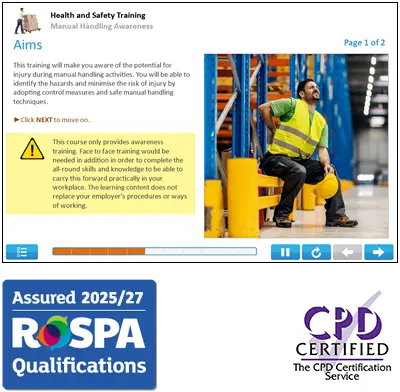
Manual Handling Online Training Course
Price£17.50 + £3.50 VAT
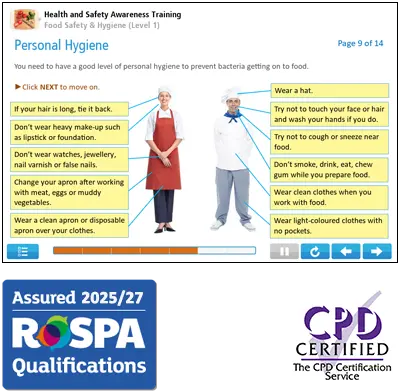
Level 1 Food Hygiene Course Online
Price£12.00 + £2.40 VAT
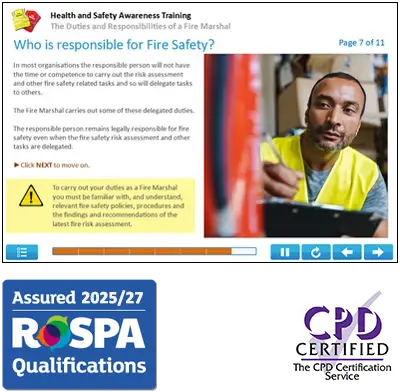
Online Fire Marshal (Fire Warden) Training Course
Price£20.00 + £4.00 VAT
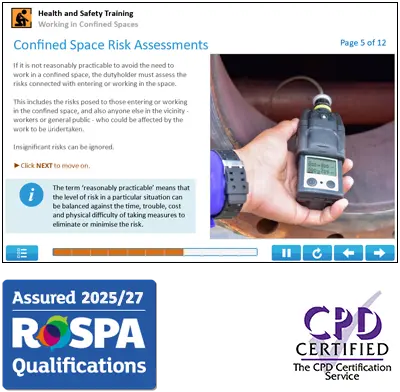
Confined Space Training Online
Price£17.50 + £3.50 VAT
