

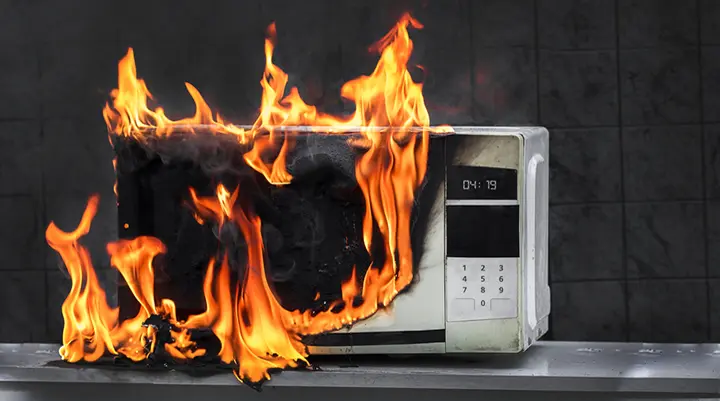

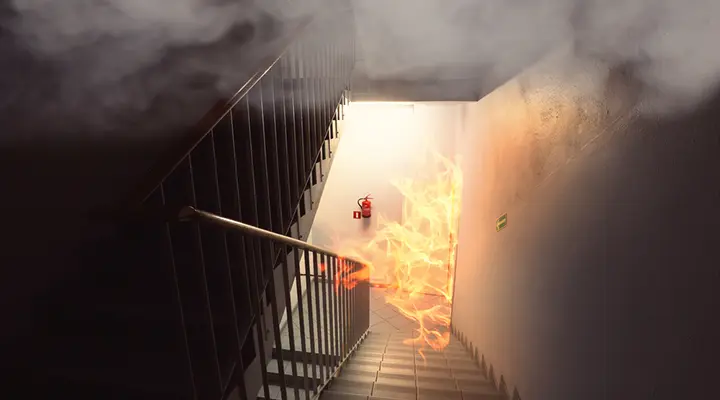
A fire risk assessment is a legal requirement for most workplaces, commercial premises, and the communal areas of residential buildings in the UK. Its purpose is to identify fire hazards, assess the risks to people and property, and implement appropriate fire safety measures to reduce the likelihood of a fire and protect occupants.
Fires can have devastating consequences, resulting in injury, loss of life, and significant damage to buildings, equipment, and business operations. Conducting a fire risk assessment helps organisations identify potential fire risks, improve workplace fire safety, and ensure compliance with fire safety legislation. Providing employees with appropriate Online Fire Safety Training can also help staff recognise fire hazards, understand emergency procedures, and contribute to a safer working environment.
Under UK fire safety law, the responsible person must carry out and regularly review the fire risk assessment to ensure it remains suitable and up to date. This article explains what a fire risk assessment is, who the responsible person is, and their legal responsibilities for managing fire safety.
What is a fire risk assessment?
A fire risk assessment is a systematic review of a building, its occupants, and the activities carried out within it to identify potential fire hazards and evaluate the risk of fire. The assessment helps determine who may be at risk and what fire safety measures are needed to prevent fires and protect people, property, and business operations.
By carrying out regular fire risk assessments, organisations can identify and reduce fire risks, improve workplace fire safety, and help ensure compliance with fire safety legislation. This helps create a safer environment for employees, visitors, residents, and other building occupants.
Is a fire risk assessment a legal requirement?
Yes. Fire risk assessments are a legal requirement in the UK. The Regulatory Reform (Fire Safety) Order 2005, the Fire Safety (Scotland) Regulations 2006 and the Fire Safety Regulations (Northern Ireland) 2010 require responsible persons to carry out and regularly review fire risk assessments in commercial premises and the communal areas of residential buildings.
A fire risk assessment helps identify fire hazards, evaluate risks, and implement appropriate fire safety measures to protect people and property. Responsible persons must ensure that fire risk assessments are recorded where required by law and reviewed regularly to keep them up to date.
Who is the responsible person?

The responsible person is the individual who has control, or a degree of control, over a building. This may include:
- The building owner
- The landlord
- The occupier
- The employer
The responsible person will depend on who has control over the premises and its day-to-day management. In a workplace, the responsible person is typically the employer if they have any level of control over the building or work environment.
The responsible person must take reasonable steps to reduce fire risks, implement appropriate fire safety measures, and ensure that employees receive appropriate Fire Safety Training.
The general duties of a responsible person include:
- Carry out a fire risk assessment and review it regularly.
- Take adequate and appropriate fire safety measures to minimise the risk of injury or death.
- Monitor and review fire prevention and protection measures in the premises.
- Eliminate or reduce risks from dangerous substances.
- Ensure that fire detecting and fire-fighting equipment is available in the premises, can be easily accessed and is indicated by signs.
- Ensure that fire exits and routes to fire exits are clear at all times.
- Regularly carry out and review fire drills.
- Ensure that any equipment is in good working order and repaired, when necessary.
- Appoint a competent person to help them to undertake preventative and protective measures.
- Inform and train employees.
What are the 5 steps of a fire risk assessment?
By law, the responsible person must conduct regular fire risk assessments of the premises to ensure the safety of people who work there or visit the building. The 5 steps of a fire risk assessment help to identify what they need to do to minimise the risks of a fire and protect people from harm. The 5 steps of a fire risk assessment are:
1. Identify the fire hazards
Fire occurs when a source of heat comes into contact with fuel and oxygen. So, they must be kept separate. The responsible person should identify anything that can produce heat or cause sparks, such as faulty electrical equipment, cooking appliances, portable heaters, cigarettes, and hot processes such as welding or grinding. Also, they need to identify any fuel sources. This include packaging materials, rubbish, petrol, paint, wood, paper, plastic, rubber and foam. Oxygen sources can include air conditioning systems, oxygen cylinders and fireworks that contain oxidising materials.
2. Identify people at risk
Everyone is at risk if a fire occurs. However, some people may be more vulnerable than others. The responsible person needs to identify the people who may be in the building, what they are doing and where they are. They should pay particular attention to those who may be working in noisy environments, staff who work night shifts or people in an isolated part of a building. Also, the responsible person should identify people with disabilities, children, or those who are not familiar with the building, such as visitors and customers.
3. Evaluate, remove or reduce the risks
Once the responsible person has identified the fire hazards and people who may be at risk, they should evaluate the risks of a fire occurring and the risks to people in the building. Then, they should take actions to remove or reduce those risks.
First, the responsible person should consider how they could remove or reduce the identified hazards. For example, if there are any risks that faulty electrical appliances could cause sparks and start a fire, they must organise the repair or replacement of the appliance. Faulty electrical equipment is a common cause of workplace fires. Regular PAT Testing and equipment inspections can help reduce these risks. Also, if there are any gas or fuel leaks, especially in the areas where hot work is present, the responsible person must arrange regular servicing and repair work by qualified engineers. Furthermore, the responsible person must ensure that rubbish and other combustible materials are not close to a heat source and they must maintain good housekeeping at all times.
Then the responsible person needs to consider how they could protect people from harm if a fire occurs. For example, how will a fire be detected, how will everyone be alerted of the fire in the building? Also, they need to consider whether everyone will be able to use escape routes to evacuate quickly and safely and if there are fire extinguishers that can be easily accessed to put out a small fire. The responsible person should also decide how to improve emergency procedures.
4. Record findings, prepare an emergency plan and provide training
The responsible person should record any fire hazards that they have found and the actions they have taken to reduce or remove them. Also, they should prepare a clear emergency plan that identifies what people need to do in an emergency. The plan should include safe evacuation procedures for people who may need help. It should identify people who will have specific roles if a fire breaks out, such as fire marshals. If your business does not have a designated marshal, we recommend participating in our Online Fire Marshal Training Course. Furthermore, the responsible person should ensure that staff receive fire safety training, so that they are aware of how to prevent fire from occurring and know what to do in an emergency.
5. Review and update the fire risk assessment regularly
There is no legal timeframe for when the responsible person should review the fire risk assessment. However, they must review the fire risk assessment regularly and update it when there have been significant changes. These changes can be changes in work processes, layout of the premises or people that use the building. They should update the risk assessment to ensure it is up to date and safety measures are relevant.
How often should a fire risk assessment be reviewed?
A fire risk assessment should be reviewed regularly to ensure it remains accurate, effective, and compliant with fire safety legislation. The responsible person must also review and update the assessment whenever significant changes occur to the building, its occupancy, work activities, layout, or fire safety arrangements.
While there is no fixed legal timeframe for reviewing a fire risk assessment, best practice is to carry out a review at least annually and whenever changes could affect the risk of fire or the safety of occupants. Regular fire risk assessment reviews help identify new fire hazards, ensure fire safety measures remain effective, and maintain compliance with UK fire safety regulations.
Related Fire Safety Resources
- Fire safety in the workplace – A simple guide
- The Importance of Fire Safety Training in the Workplace
- How to use a Fire Extinguisher: The Pass Method Explained
- Best Fire Extinguisher for Electrical Fires
- What is a Fire Marshal?
Online Risk Assessment Training
Understanding who is responsible for completing a fire risk assessment is only one part of maintaining a safe workplace. Employers, managers, and responsible persons should also understand how to identify hazards, evaluate risks, and implement effective control measures.
Our IIRSM-Approved and CPD-Certified Online Risk Assessment Course provides practical guidance on carrying out workplace risk assessments, identifying hazards, and reducing risks to employees and visitors. The training helps organisations meet their health and safety responsibilities while supporting a safer working environment.
Delivered entirely online, employees can learn at their own pace while employers benefit from a flexible and cost-effective training solution. Upon successful completion, learners receive an instant certificate, helping organisations demonstrate compliance with workplace fire safety requirements.


For organisations looking to strengthen workplace fire safety, we also offer Fire Safety Awareness Training to help employees identify fire hazards, understand evacuation procedures, and support fire prevention measures.