
Discounts Available For Bulk Purchases
| No. of total licenses | % saving |
|---|---|
| 1 - 9 | - |
| 10 - 19 | 10% |
| 20 - 49 | 20% |
| 50 - 99 | 25% |
| 100 - 199 | 30% |
| 200 - 499 | 40% |
| 500 - 999 | 50% |
| 1000 + | 60% |
Click on the image below to download the Allergy Awareness Training for Schools Flyer.
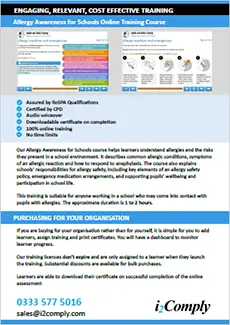
Allergy Awareness Training for Schools
£8.75 + £1.75 VAT
- Audio voiceover
- Approximate course duration 1-2 hours
- Downloadable certificate on completion
- 100% online training
- No time limits
Our online Allergy Awareness Training for Schools gives school staff the knowledge and practical understanding they need to help keep pupils with allergies safe. The course explains how to identify common allergens, recognise the signs and symptoms of an allergic reaction and anaphylaxis, and respond effectively in an allergy emergency, including the use of adrenaline devices.
Learners will also understand how schools can manage allergy risks effectively, from reducing allergen exposure and supporting pupils with allergies to implementing an allergy safety policy and managing prescribed and spare emergency medication.
The course has been developed in line with the Children’s Wellbeing and Schools Act 2026, often referred to as Benedict’s Law, and the statutory guidance Allergy Safety in Schools.
This online allergy awareness course for schools takes approximately 1 to 2 hours to complete and provides practical training for staff responsible for supporting the safety and wellbeing of pupils with allergies.
What is Benedict’s Law?
Benedict’s Law introduces stronger allergy safety requirements for schools in England from September 2026.
Named in memory of five-year-old Benedict Blythe, the changes are designed to help ensure children with allergies are better protected at school.
Schools are expected to have a whole-school allergy policy, provide allergy awareness and emergency response training, maintain appropriate Individual Healthcare Plans, and have access to spare adrenaline auto-injectors (AAIs) for emergencies.
Who should take Allergy Awareness Training for Schools?
This course is designed for anyone working in a school who may encounter pupils with allergies. This includes teachers, teaching assistants, support staff, lunchtime supervisors, catering staff, office staff, senior leaders, supply staff, coaches, breakfast and after-school club staff and volunteers working under the school’s supervision.
The course is particularly relevant to staff working in maintained schools, academies and pupil referral units (PRUs) in England, where Benedict’s Law specifically applies.
Although the course is designed for schools, much of the practical content is also relevant to early years settings and colleges, as many of the practical recommendations, including recognising allergic reactions, preventing allergen exposure and responding to anaphylaxis, are equally relevant across those settings. However, the statutory duties covered by Benedict’s Law and the Allergy Safety in Schools guidance do not apply to early years providers and colleges in the same way. These settings should also follow the legislation and guidance applicable to their own setting.
What will you learn on the Allergy Awareness for Schools course?
On completion of the Allergy Awareness for Schools course, you will be able to:
- Describe what an allergy is and identify common allergens.
- Recall different allergic conditions, including food allergy, asthma, eczema and hay fever.
- Distinguish between food allergy, food intolerance and coeliac disease.
- Identify the main symptoms of an allergic reaction and recognise anaphylaxis.
- Describe how to respond in an emergency and how to use an adrenaline device.
- Outline schools’ legal duties for allergy safety and key elements of a school’s allergy safety policy.
- Identify allergy risks in schools and describe staff responsibilities for reducing exposure to allergens.
- Recall the impact allergy can have on a pupil’s wellbeing and how staff can support them.
Example Allergy Awareness for Schools course pages
Below are some examples of the screens you’ll see in our online Allergy Awareness for Schools course.
We design our training to be clear, practical and easy to follow, using concise explanations, interactive activities and realistic scenarios to help learners understand and apply the information.
(Click on the example screens below to view)
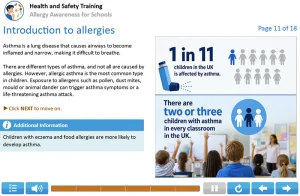

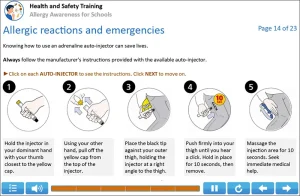

What does our Allergy Awareness Training for Schools cover?
Our Allergy Awareness Training for Schools is divided into four topics:
1 – Introduction to allergies
The first topic explains what an allergy is and what happens in the body when someone is exposed to an allergen. It covers the different things people can be allergic to and the distinction between food allergy, food intolerance and coeliac disease. The topic also explores different allergic conditions, including asthma, eczema and hay fever and how they can occur together. Finally, you will learn how common allergies are in schools.
2 – Allergic reactions and emergencies
The second topic explains the common signs and symptoms of an allergic reaction. It also describes what you should do in the event of anaphylaxis, including when and how to use adrenaline devices and the rules around prescribed and spare adrenaline devices. The topic also explains how to recognise an asthma attack and when breathing difficulties should be treated as anaphylaxis.
3 – School responsibilities and allergy safety policy
The third topic explains the legal responsibilities schools have for allergy safety, including the requirements of Benedict’s Law. It covers the purpose and key elements of an allergy safety policy and the arrangements schools should have in place to support pupils with allergies and reduce the risk of allergen exposure. This topic also explains how allergy information should be communicated and how allergy-related incidents should be recorded, reported and reviewed.
4 – Reducing allergen exposure and supporting wellbeing
The fourth topic explains where allergens can be encountered in schools and how the risk of exposure can be reduced. It covers practical ways to manage allergen risks and adapt school activities so that pupils with allergies can participate safely alongside their peers. The topic also explores how allergies can affect pupils’ wellbeing, including the impact of anxiety, exclusion and allergy-related bullying. It explains how staff can support pupils to feel safe, confident and included in school life.
How is the Allergy Awareness for Schools course assessed?
Once you have completed all four topics, you will need to take a short assessment to receive your certificate.
The assessment will consist of 12 questions generated from question banks, so the questions vary each time it is taken. This makes the course suitable for both initial and refresher training.
There is no limit to the number of assessment attempts. If you do not pass on your first attempt, you can take your time, review the course materials and try again.
Allergy Awareness Training for Schools certificate and renewal

Once you have successfully completed the Allergy Awareness for Schools assessment, your course certificate will be available to download and print immediately.
How long is the certificate valid for?
Our Allergy Awareness for Schools certificate does not have an expiry date. However, we recommend completing the training again after 1 year as a refresher.
The recommended renewal date will be on your certificate.
Course reviews
Choosing the right training course is important. See what other learners have said about our online training.
You can view our Course Reviews to see feedback from previous learners.
We value your feedback too. Once you have completed the course, we would be grateful if you could share your experience by leaving a review on Reviews.io or Google.
Why is Allergy Awareness training important in schools?
Allergies are common in schools. Around two children in every classroom have a food allergy, and these allergies can have a significant impact on pupils’ safety, participation in school life and wellbeing.
The risks of an allergic reaction at school can be severe. The Natasha Allergy Research Foundation’s School Attendance Survey found that half of parents said their child had experienced an allergic reaction at school, and 1 in 4 of those reactions were severe. While food allergy-related deaths in schools are uncommon, they do tragically happen. Around 17% of fatal food anaphylaxis cases in school-aged children take place in a school setting.
The same survey found that 70% of parents said their child had experienced school absences because of their allergy, and 63% said allergies had negatively affected their child’s education. A third of parents have even considered homeschooling because they don’t feel school can keep their child safe.
Beyond attendance and academic progress, pupils can experience anxiety, exclusion or allergy-related bullying, and may feel less confident taking part in school activities.
These findings show how crucial it is that staff understand allergies and are prepared to support pupils. Unfortunately, there is a significant gap in allergy awareness among school staff. A 2024 survey by NASUWT, carried out in collaboration with the Natasha Allergy Research Foundation, found that 67% of school staff had not received allergy awareness training.
Every school should give each pupil the chance to achieve their full potential in a safe and inclusive environment. To achieve this, all school staff need to understand how to reduce allergy risks, recognise and respond to allergic reactions, support pupils’ wellbeing and make school activities safe and inclusive for everyone.
Our online Allergy Awareness Training for Schools builds exactly that capability, giving staff the knowledge and confidence to recognise allergic reactions, respond to anaphylaxis, reduce allergy risks and support pupils with allergies so they can participate safely and confidently in school life.
Book Allergy Awareness Training for Your School
Whether you are purchasing training for yourself or arranging training for a team, booking your Allergy Awareness for Schools course with i2Comply is easy. Simply select the number of courses you need, click ‘Add to basket’ and proceed with your purchase.
Once purchased, you can start the course when it suits you. There is no requirement to complete the training immediately after purchase, making it easy to fit the course around your schedule.
Schools and other organisations can also purchase multiple licences and assign them to staff when they are ready to complete the training. This allows you to benefit from our bulk purchase discounts.
Other online courses for the education sector
Looking for other training courses for your school or education setting? i2Comply offers a wide range of online health and safety, compliance and safeguarding courses designed to help schools and other educational settings meet their training needs.
You may also be interested in:
- Data Protection and the GDPR for Schools Training Course
- Fire Safety Awareness (Schools and Colleges) Training Course
- First Aid in the Workplace Online Course
- Prevent Duty Online Training
- Risk Assessment Training Course
- Safeguarding Children Level 1 Online Course
- Safeguarding Children Level 2 Online Course
Looking for more training? Explore our full range of online training courses for the education sector.
Frequently Asked Questions
Yes. Schools in England have a responsibility under Benedict’s Law and the statutory Allergy Safety in Schools guidance to put allergy safety training in place for staff. The guidance states that all staff present when pupils are scheduled to be on site should receive allergy awareness training, including permanent and temporary staff, supply teachers, agency workers, regular volunteers and catering staff.
School staff should receive allergy awareness training that enables them to recognise and respond appropriately to allergies and allergic reactions in a school environment.
Training should cover common allergens, the signs and symptoms of an allergic reaction and anaphylaxis, what to do in an allergy emergency, and the use of adrenaline devices. Staff should also understand their responsibilities for reducing allergen exposure, following the school’s allergy safety policy, supporting pupils with allergies and knowing the arrangements for prescribed and spare emergency medication.
Our Allergy Awareness for Schools course covers these key areas and has been developed in line with Benedict’s Law and the statutory Allergy Safety in Schools guidance.
Under Benedict’s Law, schools in England must ensure staff receive appropriate allergy awareness training so they understand how to keep pupils with allergies safe.
Training should cover how to recognise and respond to allergic reactions, including anaphylaxis, what to do in an allergy emergency, and the use of adrenaline devices. Staff should also understand the school’s allergy safety policy, how to reduce the risk of allergen exposure, and the arrangements for pupils’ prescribed and spare emergency medication.
Our Allergy Awareness for Schools course has been developed in line with Benedict’s Law and the statutory Allergy Safety in Schools guidance, helping school staff understand their responsibilities and respond confidently to allergy risks and emergencies.
The course is designed for anyone working in a school in England who may encounter pupils with allergies. This includes teachers, teaching assistants, support staff, lunchtime supervisors, catering staff, office staff, senior leaders, supply staff, coaches, breakfast and after-school club staff, and volunteers working under the school’s supervision.
Yes. The course explains how to recognise the signs and symptoms of anaphylaxis and what to do in an allergy emergency. It also covers the use of prescribed and spare adrenaline devices, including when they should be used.
No. The course covers allergies more broadly, including different allergic conditions and allergic reactions. Food allergies are given particular attention because they are common among children and can present significant risks in schools.
The course is designed primarily for schools in England. However, much of the practical content is also relevant to early years settings, including recognising allergic reactions, preventing allergen exposure and responding to anaphylaxis. Early years providers should also follow the legislation and guidance applicable to their own setting.
The course takes approximately 1 to 2 hours to complete. This is an estimated time, and learners can take longer if they need more time to review the course materials.
You do not need to complete the course in one sitting. You can stop at any time and return later to continue from where you left off.
At the end of the Allergy Awareness for Schools course, you will complete a short online assessment consisting of 15 questions. Questions are generated from question banks, so they may vary each time you take the assessment.
There is no limit to the number of attempts. If you do not pass first time, you can review the course materials before trying again. Once you successfully complete the assessment, your certificate will be available to download and print immediately.
No. The Allergy Awareness for Schools certificate does not have an expiry date. However, we recommend that learners renew their training annually to keep their knowledge and understanding up to date.
A recommended refresher date is shown on the certificate as a reminder of when the training should be renewed.
The Allergy Safety in Schools statutory guidance recommends that allergy safety training is renewed annually to ensure staff knowledge remains up to date and that staff remain confident in recognising allergy risks and responding appropriately to allergic reactions and emergencies.
Yes. Schools can purchase multiple course licences and assign them to individual members of staff when they are ready to begin their training. This makes it easy to manage training across your school and provide access as and when required.
Individual learners can also purchase a single course licence for their own training.
Do you have a question about this online course?
If you have any questions about our Allergy Awareness for Schools course, our team is here to help. Please don’t hesitate to get in touch if you need any further information or assistance.
You can also visit our help & knowledge base, where you’ll find answers to common questions about our online courses, including licences, payments and account settings.
Request an online training quote
Whether you are looking to train a small team or an entire business, we’re here to help. Let us know your online training requirements and we’ll provide you with a quote.
£8.75 + £1.75 VAT
Discounts Available For Bulk Purchases
| No. of total licenses | % saving |
|---|---|
| 1 - 9 | - |
| 10 - 19 | 10% |
| 20 - 49 | 20% |
| 50 - 99 | 25% |
| 100 - 199 | 30% |
| 200 - 499 | 40% |
| 500 - 999 | 50% |
| 1000 + | 60% |
Related courses
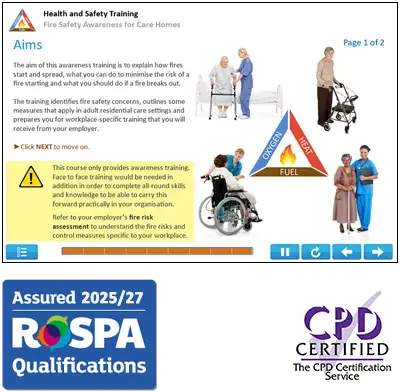
Fire Safety Online Training for Care Homes
Price£17.50 + £3.50 VAT
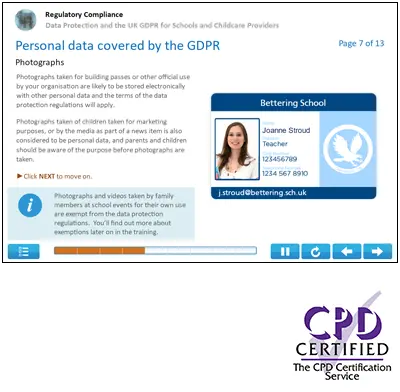
Data Protection and the GDPR for Schools Training Course
Price£17.50 + £3.50 VAT
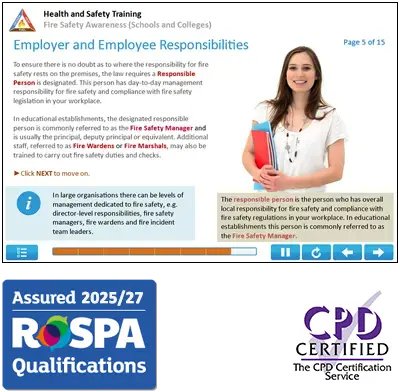
Online Fire Safety Awareness Course (Schools and Colleges)
Price£17.50 + £3.50 VAT
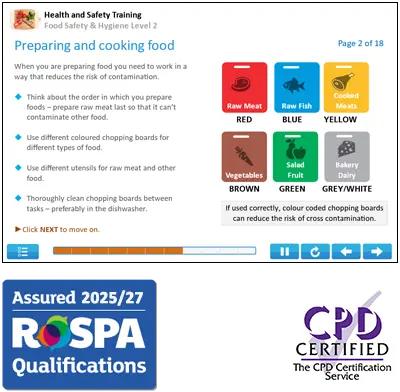
Online Level 2 Food Hygiene Course
Price£17.50 + £3.50 VAT
